Written by Matt Betten
I’m not talking about getting a six pack, although a strong core can be helpful for runners, too. No, I’m talking to the folks who say things like “I’ll have a gel or two during my race” or “I don’t know, I’ll try whatever they have on course”.
In the past several years there has been a lot of study involving your gut, your microbiome, and all the health considerations it’s involved in. For runners, you need to train your gut the same way you do your muscles and cardiovascular system – incrementally and intentionally.
But first, let’s start with why. Research shows that significant glycogen depletion begins around 90-120 minutes of running at moderate effort. Glycogen is the energy your body uses to power your muscles to do all that running. After that, your energy quickly wanes, your fatigue increases coupled with an increased perception of exertion, and altogether your performance declines. Therefore, it’s highly recommended that with any consistent effort over 60 minutes, you begin to regularly replenish your glycogen stores – aka consume calories, specifically carbohydrates – to maintain your performance.
But as anyone who has tried it can tell you, eating (or drinking) while running is hard. Both mechanically (I’m trying to breathe over here!) and on your stomach. Your entire GI system is under stress as blood flow is directed to those hard working muscles rather than for processing food. But here’s the good news! In the same way that your muscles adapt to training – building up mileage and speed over time – your gut can do the same. So, here’s what I implore everyone training for half marathons or longer, or who just like to run for a long time, to try: treat your in-run nutrition with as much focus as you do the running itself.
Some tips:
- Find the right food or drink mix for YOU.
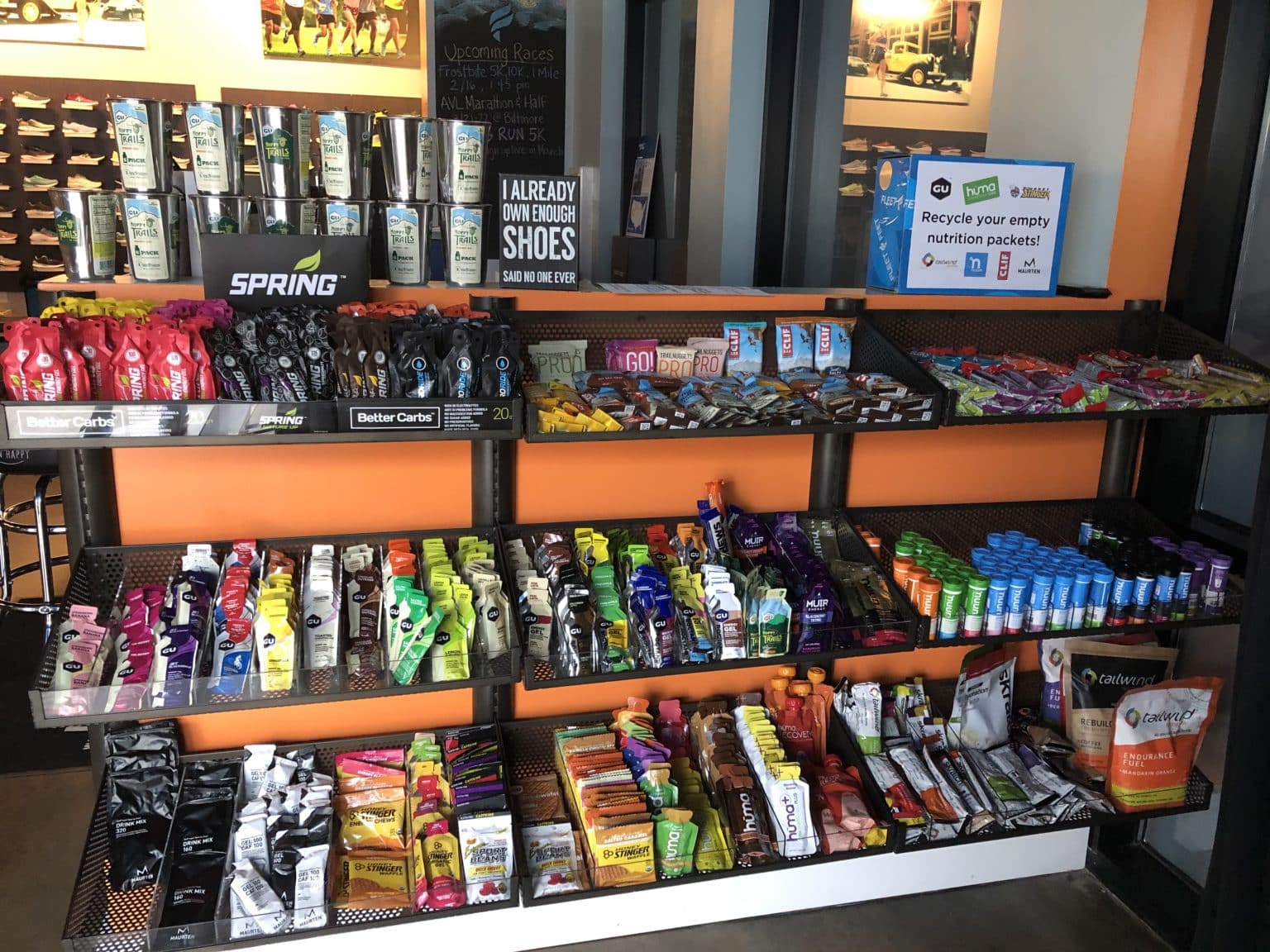
There are many many different gels, bars, homemade snacks, and snacks out there. There is not one right answer. Just a right answer for you. You’ll likely need to experiment to find what works for you.
2. Set a recurring timer for exactly when you need to eat during a run.
Don’t wait until you feel hungry, it’s already too late! It’s also easy to miss your time to eat when you’re locked in.
3. Start easy, increasing volume and interval as part of your training.
I used to eat every 45 minutes. But to get more calories, every two weeks I decreased the time between eating, to 40 minutes, then 35, then 30 minutes which allowed me to hit my hourly caloric goal while running. What’s your nutrition goal? What’s your plan to get there?
4. Practice eating at race pace.
Your stomach is going to feel a lot different (be working a lot harder) when you’re running at your biggest effort than when you’re on an easy run.
5. Endure and overcome the discomfort.
You know how some on runs your legs just feel bad? The same will happen as you experiment and improve your nutrition. You will have bloated, uncomfortable stomach runs. But you’ll also have good days where you feel the consistent energy. It’s worth it for the improvement in performance you’ll get come race day.