Written by Julie Kujawski
A year ago, if you told me I’d be training for a 70.3, I would have laughed. I was a runner. Running made sense. Swimming felt intimidating, biking felt complicated, and triathlons seemed like something other people did.
Now, after completing my first triathlon and training for bigger goals, I’ve learned a few things that might help anyone considering stepping outside their comfort zone:
1. You don’t have to be good at all three sports.
You just have to be willing to learn. Every triathlete starts somewhere. Most of us aren’t experts when we begin.
2. Borrow confidence from your strengths.
Running was my comfort zone. On the days swimming frustrated me or biking felt awkward, I reminded myself that fitness transfers. The engine you’ve built as a runner is more valuable than you think.
3. Practice being a beginner.
As runners, we’re often used to knowing what we’re doing. Triathlon humbled me quickly. Learning new skills, making mistakes, and feeling awkward again has been one of the most rewarding parts of the journey.
4. Focus on finishing, not performing.
My first race wasn’t about pace, placement, or podiums. It was about proving to myself that I could do something that scared me. That mindset made the experience far more enjoyable.
5. The community matters.
I’ve discovered that endurance athletes are some of the most encouraging people you’ll meet. Ask questions. Seek advice. Nobody starts this journey knowing everything.
6. Growth hides behind discomfort.
Every breakthrough I’ve had in training started as something I didn’t think I could do. The swim that seemed impossible. The bike ride that felt too long. The workout I almost skipped. Growth rarely announces itself in advance.
Most importantly, don’t wait until you feel ready. Ready is often something that appears after you start, not before.
Whether your next challenge is a faster 5K, your first marathon, or your first triathlon, trust yourself enough to begin.
You might surprise yourself.
What was the last thing you did that scared you a little?
If you’re still reading and are curious about some of my experiences, tips, wish I’d knowns, etc. read on…
CLOTHING & FUELING
1) There are reasonable tri suits you can buy, but you can also wear shorts, sports bra and shirt. A tri suit is great under a wetsuit and it dries quickly. Whatever you decide, make sure you are okay with it getting wet and wearing it under your wetsuit. Changing options are limited in transition and as far as I know you’re not allowed to for lack of a better term get naked to put on dry clothes. Obviously you will be able to put on socks and change your shoes and put clothing on, but there are rules and limitations to what is acceptable changing etiquette.
2) Wetsuits can get expensive. I bought a cheap Amazon one for my first tri, but you can find used wetsuits or borrow one.
3) Swim goggles & swim cap. Invest in a decent pair of goggles. Ones that don’t fog up or slide off your face (tip: you can rub rubbing alcohol or spit on the inside to help when if/when they do fog up). If you find a pair you really like get another pair as backup. Swim caps are personal preference. I have long hair so I bought ones made specifically for that.
4) Biking shoes or you can use your running sneakers, socks, helmet, biking gloves if you prefer, sunglasses
5) Running sneakers
RULE: No new clothing, food/fuel on race day! Practice wearing and fueling what you’re going to be using on race day. As runners, we know this already, but just a reminder.
PRERACE
1) Make a checklist so you don’t forget anything and go over it the night before. Layout your things at home just like you will in transition.
2) Get there early morning of! This will give you plenty of time to set up transition, check your bike, go to the bathroom, fuel if needed and put on your wetsuit.
3) Walk through transition. Know where you’ll come out of the swim, where bike and run start and end is. There are usually signs. If you can pick up your packet day before walk through then if possible.
4) Set up transition. Bike goes in the rack and then you can lay a towel and place your things on it. You can find photos of how to set that up. Make a mental note where you are so you don’t get lost in a sea of bike racks after you get out of the swim.
5) If allowed, after putting your wetsuit on, get wet and do a short warm up swim. Especially if the water is cold. It will help acclimate and take the edge off the initial shock of the water.
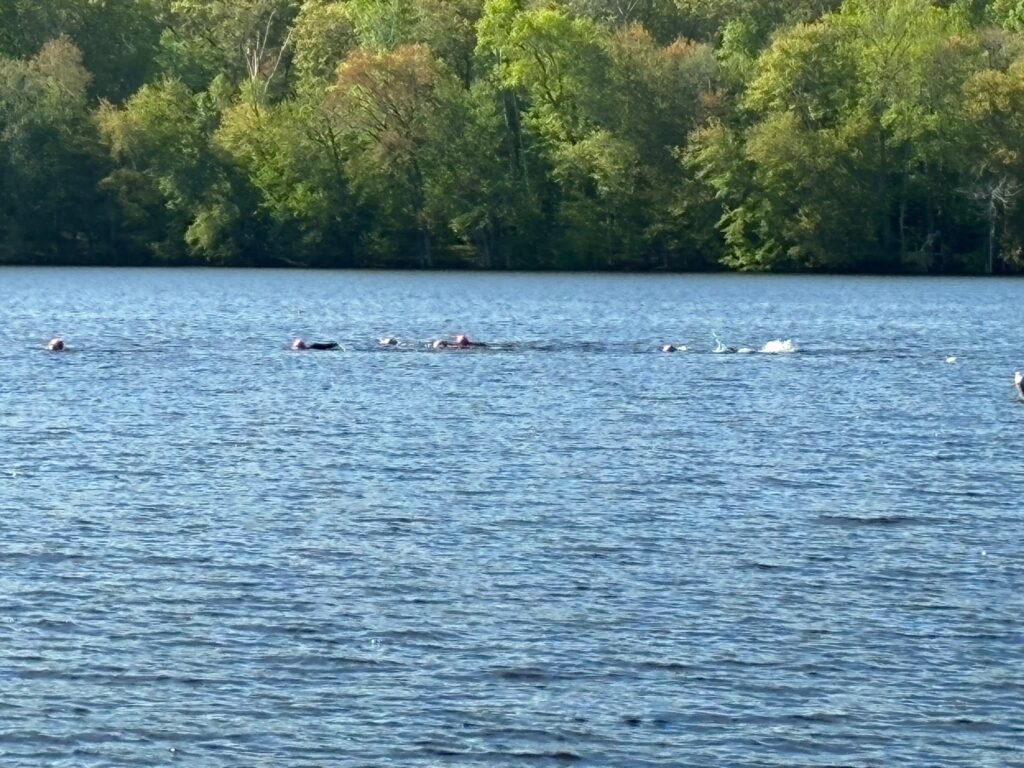
SWIM: this is my weakest area
1) Open water is quite different from the pool so if you can try to get a few open water swims that will help a lot.
2) You may panic. I totally had an anxiety attack for the first half of the 400m. The water was 59 degrees and most of my training went out the window, however swim training will teach you to default on your back, side or front take a few breaths and reset. There are also kayaks you can hold on if you need a break. Just as long as you don’t use them to get forward momentum, you’re okay to do that.
3) You don’t need to be a freestyle/front crawl pro. I was among many of folks who defaulted to side and breast stroke and it worked just fine. My goal was to finish. I didn’t care how it looked.
4) You may get kicked, slapped or swum over. There will be others swimming and they may not see you. I stayed on the outside and in the back to avoid those things and was okay, but there were a few brushes with people.
5) Practice sighting. If you need to switch strokes every so often to do that, that’s okay. Better to swim 400m in a straight line than 600m zig zagging.
6) You will feel amazing when your feet hit land. I had a few happy expletives as I walked out. You may also feel disoriented so stand up slowly, let your body acclimate to being upright and continue to transition.
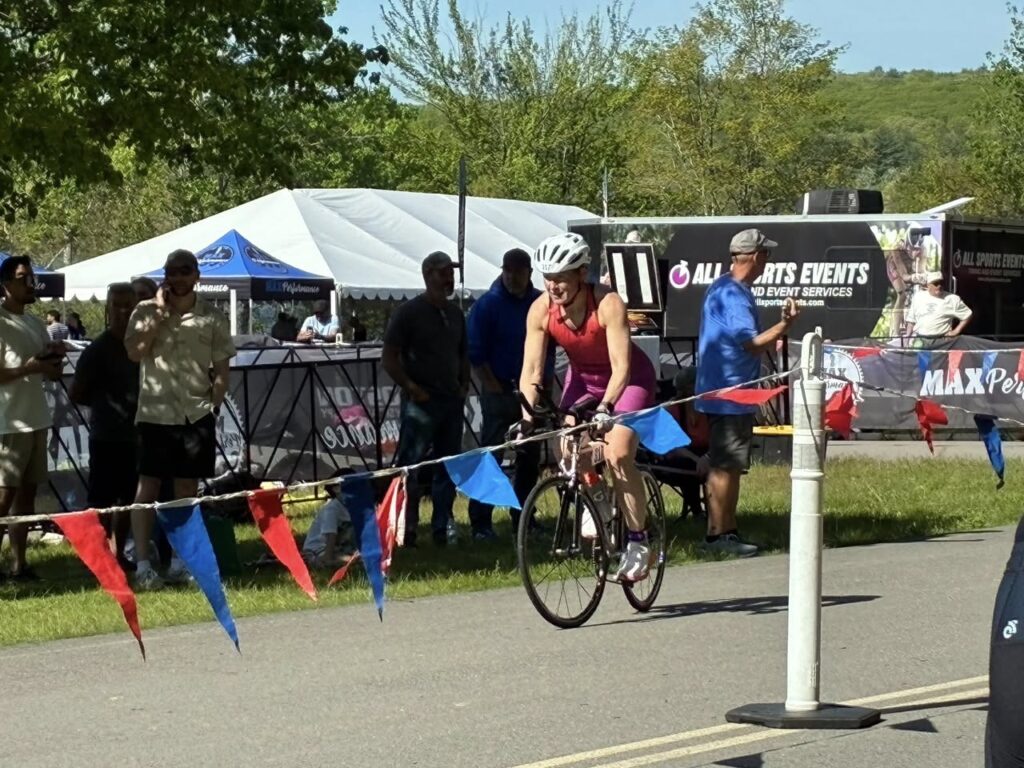
BIKE: this is not my weakest but not my strongest either
1) You don’t need a fancy tri bike. Road or Tri bikes are personal preferences. I made the mistake of buying a used tri bike not realizing that I would need to learn aero position which at this time is awkward for me. Test ride and do your due diligence before you buy.
2) Clipless or regular pedals? Another personal preference. I was able to get adjusted clipping in but was still not totally confident for my first tri so I wore my running sneakers and they were fine. Clipping in I will say does make a difference and I would recommend learning it if you can.
3) If you’re new to clipping in like me, you WILL fall. It’s not a matter of if, it’s when. I fell multiple times and I’m sure I’ll fall more. My first time was at a busy intersection in front of a lot of people. Nobody cared. I laughed and got back on and kept going. A majority of falls are when you’re stopped or going pretty slow. Practice clipping in in a parking lot or on a flat field to get comfortable.
5) If you’re nervous about riding on roads, if you have access to it, ride the rail trail until you get comfortable. Although rail trail is less predictable than cars. With dogs, kids, people there are times when you may need to stop frequently which may effect your ride.
6) Hydrate and fuel on the bike if you can. It will help get you ready for the run.
7) You will feel good on the bike. Stretch that out. Don’t burn yourself on hills and ride fast and furious because you feel good. That will negatively impact your run.
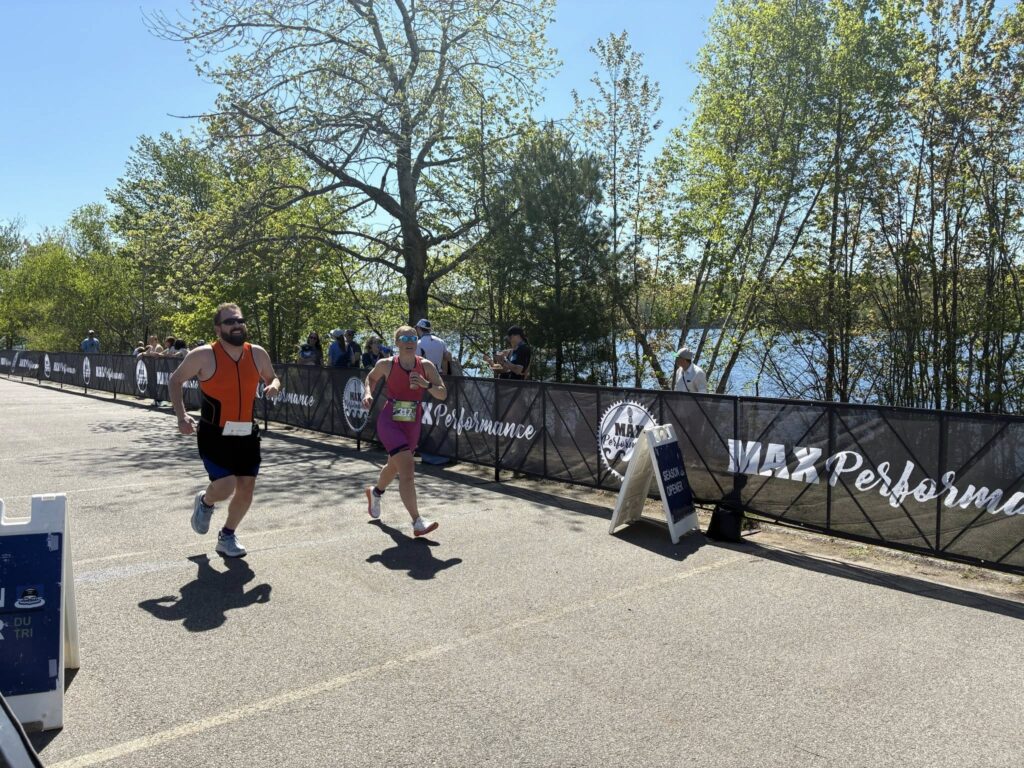
RUN: my strongest area
1) Walk then rack your bike.
2) Don’t forget to remove your helmet before you start. This happens more often than you think.
2) Your legs will feel weird at first after the bike. Start slow and adjust.
3) You will want to go fast after the bike momentum. Try to pace yourself. I’ve been training in zone 2 and it felt slow at first but it’s meant for endurance and now I can see why.
4) When you know you’re close to the end, you may be tired but seeing that finish line and hearing your name will be worth it.
5) Sign up for another tri!!
t
2) You may panic. I totally had an anxiety attack for the first half of the 400m. The water was 59 degrees and most of my training went out the window, however swim training will teach you to default on your back, side or front take a few breaths and reset. There are also kayaks you can hold on if you need a break. Just as long as you don’t use them to get forward momentum, you’re okay to do that.
3) You don’t need to be a freestyle/front crawl pro. I was among many of folks who defaulted to side and breast stroke and it worked just fine. My goal was to finish. I didn’t care how it looked.
4) You may get kicked, slapped or swum over. There will be others swimming and they may not see you. I stayed on the outside and in the back to avoid those things and was okay, but there were a few brushes with people.
5) Practice sighting. If you need to switch strokes every so often to do that, that’s okay. Better to swim 400m in a straight line than 600m zig zagging.
6) You will feel amazing when your feet hit land. I had a few happy expletives as I walked out. You may also feel disoriented so stand up slowly, let your body acclimate to being upright and continue to transition.
BIKE: this is not my weakest but not my strongest either
1) You don’t need a fancy tri bike. Road or Tri bikes are personal preferences. I made the mistake of buying a used tri bike not realizing that I would need to learn aero position which at this time is awkward for me. Test ride and do your due diligence before you buy.
2) Clipless or regular pedals? Another personal preference. I was able to get adjusted clipping in but was still not totally confident for my first tri so I wore my running sneakers and they were fine. Clipping in I will say does make a difference and I would recommend learning it if you can.
3) If you’re new to clipping in like me, you WILL fall. It’s not a matter of if, it’s when. I fell multiple times and I’m sure I’ll fall more. My first time was at a busy intersection in front of a lot of people. Nobody cared. I laughed and got back on and kept going. A majority of falls are when you’re stopped or going pretty slow. Practice clipping in in a parking lot or on a flat field to get comfortable.
5) If you’re nervous about riding on roads, if you have access to it, ride the rail trail until you get comfortable. Although rail trail is less predictable than cars. With dogs, kids, people there are times when you may need to stop frequently which may effect your ride.
6) Hydrate and fuel on the bike if you can. It will help get you ready for the run.
7) You will feel good on the bike. Stretch that out. Don’t burn yourself on hills and ride fast and furious because you feel good. That will negatively impact your run.
RUN: my strongest area
1) Walk then rack your bike.
2) Don’t forget to remove your helmet before you start. This happens more often than you think.
2) Your legs will feel weird at first after the bike. Start slow and adjust.
3) You will want to go fast after the bike momentum. Try to pace yourself. I’ve been training in zone 2 and it felt slow at first but it’s meant for endurance and now I can see why.
4) When you know you’re close to the end, you may be tired but seeing that finish line and hearing your name will be worth it.
5) Sign up for another tri!!