Written by Erik Dunbar
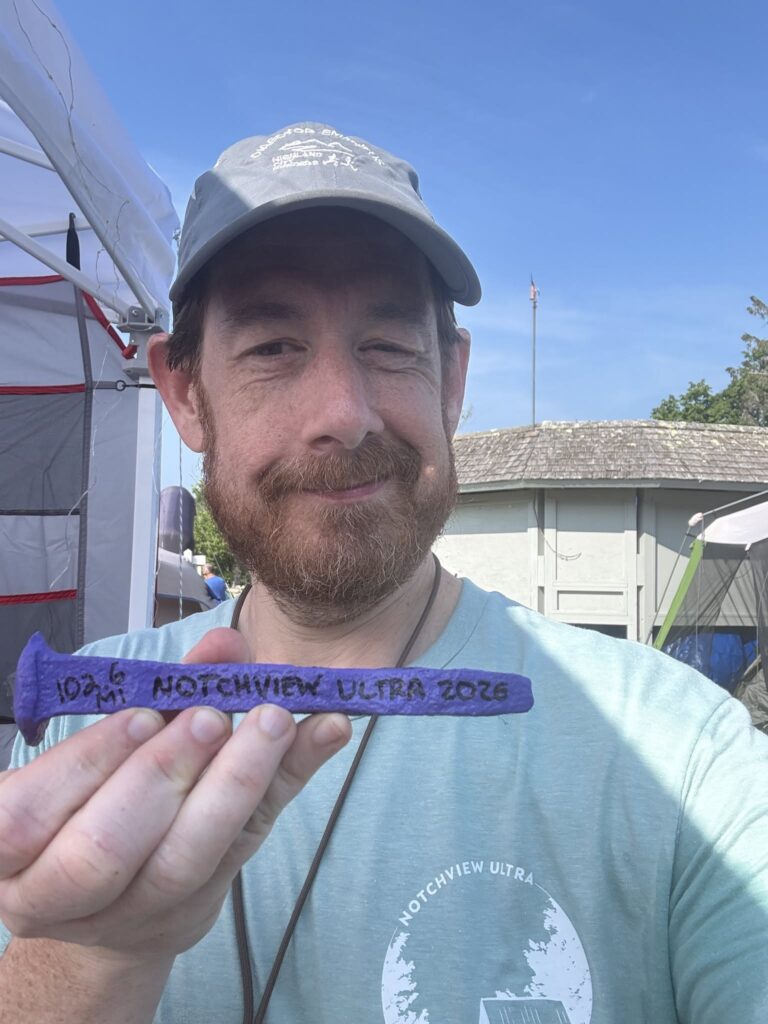
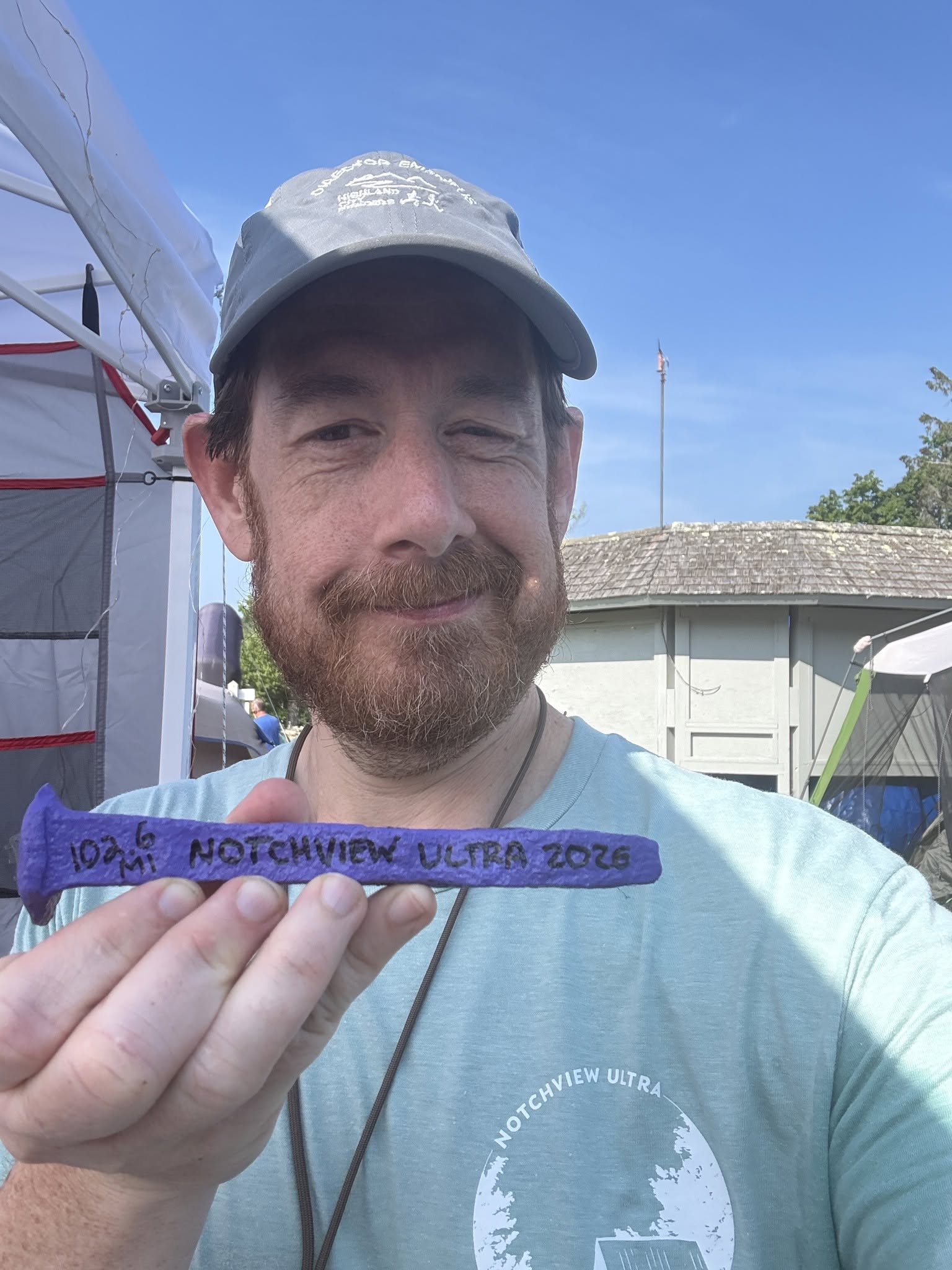
As many of you may know I recently participated in the 2026 Notchview Ultra this July. I had set a lofty (for me) goal of completing 100+ miles in 72 hours. Up until this point the longest distance I had raced was a half marathon. I figured both nutrition and training would be different for this, but I had no idea all of the other factors at play. It is a trail race, with hills and camping over multiple days. I “knew” this, but I didn’t really understand.
In short, I didn’t know what I didn’t know.
So the very first thing I did was…assemble a team! No joke, I created a group of eight people with a broad spectrum of experience with all aspects of both ultra and trail running. My own ultra running council.
Everything else that follows is a result of not just the ultra experience I had, but of all the knowledge and experience of that council. If your considering an ultra and reading this, that is the most important guidance I can offer. Talk to anyone and everyone who can, and is willing, to help. It’ll form the foundation of every decision you make going forward.
Training:
When I really got serious about doing this, I had about four and half months before Notchview. I got training plan samples Matt and Judy and those plans were very ambitious. But I also spoke to them about their plans and from that was able to tailor the plan to my own abilities. There were four guidelines I used when designing my plan.
1. Set a mileage goal for the week, or as they put it “Time On Feet.” Depending on your preference, walking or running counted toward the goal.
2. Set a cap on the number of miles in a day. This was specifically important because the plan I used as a template had single runnings days topping out at 35 miles. Judy explained that in her training she never exceeded 20 miles in a day, So I followed her guidance. So my plan was a hybrid of Matt’s plan and Judy’s advice.
3. Learning to slow down. I wasn’t training to run a 5K PR so speed wasn’t important. I had to learn to run more slowly so that I could run longer.
4. Have “rest weeks” and obey them. The training plan had a cadence of 2-3 weeks of running to a specific mileage goal followed by a light week without. I found out the hard way that you can’t ignore the rest week. One of my rest weeks happened to fall on the week of Global Running Day in June. I wanted to participate in Global Running Day, as well as some other activities throughout that week. I overextended myself, didn’t have enough down time and it affected my upcoming training weeks. Suffice it to say that I took full advantage of the next rest week on my schedule.
Shoes and Socks:
I typically run in either low cushioned shoes or “barefoot” shoes which are just shy of actually running barefoot. The council explained that I should get highly cushioned shoes. So I researched some cushioned trail shoes and experimented with them on both road and trail runs. It was also important to have more than one pair so you can change during the race. This was helpful on race weekend as changing my shoes (and socks) felt refreshing and helped motivate me through more miles.
I changed my socks and checked my feet regularly. Only a couple of times did I change my shoes. I lucked out and didn’t have a plethora of blisters to monitor. Scott had mentioned to me that in his experience people’s feet just react differently. Some people are prone to blisters, others not. I had plenty of tape and bandaging if needed, but ultimately didn’t use it. Changing my clothes regularly wasn’t a priority as long as what I was wearing was comfortable and didn’t bother me.
Body Glide:
Until Notchview I have never used any kind of anti-chafing products like Body Glide or Desitin. I hadn’t trained with it either. Another hard lesson I learned on the first day of race weekend. The end of my first day was miserable as my groin and inner thighs were so chaffed I could barely walk. It was bad enough that I briefly considered quitting. Due to that I learned quickly to apply body glide early and often. I didn’t have a chafing issue the rest of the weekend.
Hydration:
This may be specific to looped ultras as Notchview is a 1.9 mile loop meaning you have all your resouces available to you every loop. At the outset I stopped every lap to take in some fluids. By the second day I figured out that something with this hydration strategy wasn’t working. I switched to carrying my fluids with me. I think my body responded better to taking smaller drinks on the move over gulping down larger quanitities of cold fluids during a break.
I hadn’t practiced with anything but water. On advice of council I brought both Tailwind and salt tabs with me. Thinking I’d be more efficient, I pre-mixed the Tailwind in one gallon of water and the salt tabs in the other. This also didn’t seem effective for me. I can’t say for sure whether the salted water worked or didn’t, but I can say that mixing the Tailwind when I needed it rather than having a pre-prepared gallon seemed to work better. Also my not being a coffee drinker, the caffeinated Tailwind was AMAZING!
Nutrition:
I knew I had to fuel during the race, but I had to learn how to fuel while moving. Which means I needed to train myself how to eat. And knowing how my digestive system reacts to certain foods, I made a list of things I knew I could eat and drink while moving and trained with them.
The only nutrition I carried with me were Clif Bloks. I’ve been using those for years so I was very comfortable with them. All my other nutrition I left at camp and I would eat something when I stopped in. This works well for a looped ultra, but I would need another strategy for a non-looped, or large-looped route.
Other nutrition I brought with me were Pop-Tarts, Nutri-Grain bars, Larabars, sesame sticks, Fig Newtons, white bread, Uncrustables, apples, carrots and hamburger mixed with mashed potatoes. After some loops and experience, I ended up using the Pop-Tarts, sesame sticks, white bread, Uncrustables and apples the most. I found the Larabars were too sweet, the Nutri-Grain bars are really just smaller Pop-Tarts, I never ate any of the carrots, and the hamburger/potato mix wasn’t palatable unless I could heat it first, which I couldn’t.
The Pop-Tarts were my breakfast when started out in the morning, and the bread and Fig Newtons carried the day. The sesame sticks were also hugely helpful because they were so salty. And I typically had one apple a day just for a little variety.
On the third day I hit a point where I was tired of the food I brought and needed a real meal. Julie came up on the third day to visit and brought us all burgers and fries. It may have been the best burger I ever ate. It wasn’t anything fancy, just meat and bread, but it was warm, hearty and fresh!
Aches and Pains:
I learned how to run through the aches and pains. My feet, ankles and back hurt a lot as the hours accumulated. I was interested in moving for as long as I could, possibly overnight if possible. The first night I new a needed a sleeping break when the chafing became unbearable.
On the second night my feet, ankles and back were all sore. But I was stubborn and kept moving even though I had to move gingerly. As I came through the start/finish area around midnight I burped, which sent a shock through my back bad enough I froze in place. It felt like my whole back had lit up like a Christmas tree. I knew then that if I reacted to a burp that way, it was time to rest.
Trekking Poles:
I saw others using trekking poles periodically so I tried them for a little while. It was my first time using them, so I didn’t use them long term. The benefits were that they helped take pressure off my back. The drawbacks were it was another thing I had to coordinate and manage while I walked and ran. If I used them again I’d spend more time practicing with them.
Entertainment:
I hadn’t planned on it originally, but I eventually found myself needing to listen to something. I started with music, moved to podcasts and eventually settled on audiobooks. For me, music or a podcast translates into being hyper-aware of the time. I know, on average, how long a song is, and the podcasts I typically listen to are never more than 1-2 hours. The audiobook provided 15 hours of new content so it was easy to be distracted and entertained as the miles crawled by. And there will be times when you feel like your not racking up the miles fast enough so distraction is key.
Finding out what I didn’t know:
Notchview is a multi-day looped ultra, which means camping. Scott kindly invited me to share his tent and camping area. I had brought a sleeping bag and a camp chair, but there was so much more prep that Scott did that I didn’t realize until I was there. We had a tent that slept five, including Howard. We also had an EZ-up and a table where we rested and stored all of our supplies. Scott, Alyssa, Kara and myself each picked a corner of the EZ-up to place our chair. For the rest of the weekend my corner became a personal home base. I had all of my food, my clothes and my other support stuff right there within reach. If I had done this by myself I can’t imagine I would have been as well prepared as Scott was. This for me just circles back to listening to those who have done it before. Their knowledge and advice is invaluable.
Miscellaneous Items:
I overpacked and brought lots more food and supplies than I needed, however I couldn’t have known that ahead of time. Knowing what to bring will only come with experience. I also packed all of my things in clear plastic bins. This way if it rained my stuff wouldn’t get wet, and I could quickly see which bin I needed.
Having a spare portable battery to keep watch/etc charged was helpful, especially if you want to keep the GPS track going while charging the watch.
I found a way to get comfortable stopping to pee along the route and farting around other people. Sometimes you just can’t hold something in all the way back to camp.
There was an aid station at the finish line with other kinds of food and other forms of support. I didn’t visit that until somewhere late into the second day, and having some other snack options was excellent. They also provided some hot food options throughout the weekend. I was also told that they would try to accommodate any ask. For instance they may have had a way to heat up my hamburger and mashed potatoes if I asked. The lesson here is to investigate what race day/weekend support is like and how that can help you.
See less